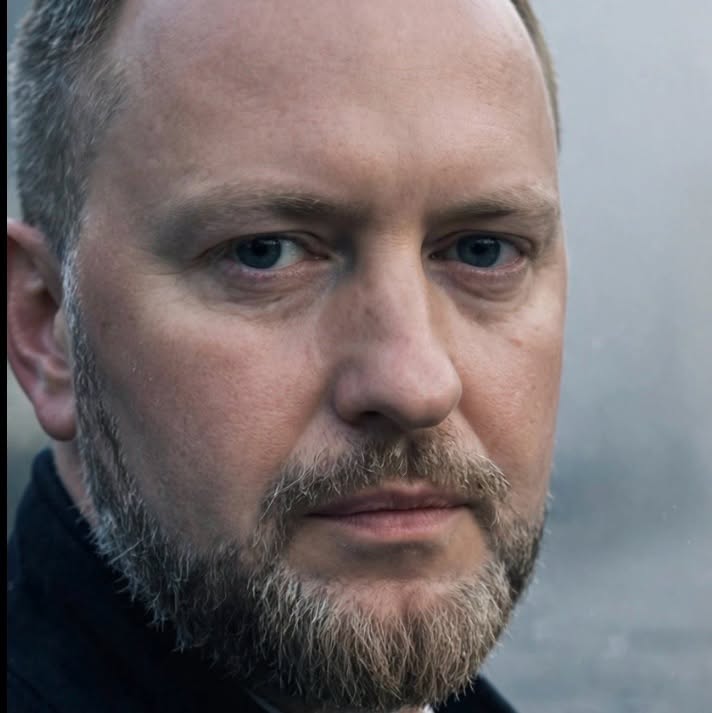
Poster · 21.08.2026
A story about how those who cannot speak save us…
There are tragedies that do more than break your heart—they take away your voice. Grief can build such a deafening wall around a person that the world shrinks to the size of an empty room.
You stop answering calls, opening letters, and looking strangers in the eye. Your life turns into a mechanical ritual: get up to the alarm, pour out the food at 7:00, go outside at exactly 7:30. On autopilot.
This is what the synopsis of the film “The Quiet Companion,” shown in the photo, is about.
It is the story of a man who, after a devastating loss, stopped speaking and shut himself away from the world. The only one who remained by his side was an old black Labrador.
For years, the man thought that he was the one caring for the limping nine-year-old dog, taking him out for walks.
But in truth, it was the dog who had been holding the leash all along.
Every day, the dog was the one pulling his owner out from behind four walls, refusing to let him disappear completely into the darkness of his grief.
The decisive turning point comes when the old dog suddenly and stubbornly breaks their long-standing ritual and turns into an unfamiliar, abandoned alley.
He leads his speechless human to an old woman who feeds stray dogs. She sees straight through people and says simple, wise words: “He knows that his time has come. They always know. And they look for a place where they will be remembered.”
The wise dog brought his owner to someone who would understand him without unnecessary words. Realizing that the Labrador’s time was running out because of his age, the hero changes their route during their “last week.”
He no longer runs in circles, but consciously shows the dog his favorite places: the lake, the park, the bench where they always shared a bone. And through this quiet gratitude toward the dog, the man begins to speak again—first to the dog himself, then to the baker, and then to the old woman. As if he were learning human speech all over again.
The most beautiful thing about this story is its ending. There is no banal, harrowing scene of the dog’s death on screen.
The director takes a subtler, brighter approach. Early one morning, the man steps onto the cobblestones alone, an empty leash in his hand—his old, devoted friend has remained behind, having fulfilled his earthly mission and entrusted his owner to safe hands.
At the end of the street, beneath a lamppost, the same old woman is waiting for him, and beside her sits a small black puppy. “He needs a ritual,” she says quietly.
The man crouches down, clips the leash to the puppy’s collar, and together they slowly walk away into the morning mist.
This is not a film about death. It is a film about the continuity of love.
About how a Labrador kept a man from dying alone, taught him to live again, and passed the baton of kindness on at just the right time.
Life always needs a ritual, and some little creature will always need our care.